
Glory to God for all things

Lessons, Proper 19A: Genesis 50:15-21; Psalm 103:1-13; Romans 14:1-12; Matthew 18:21-35
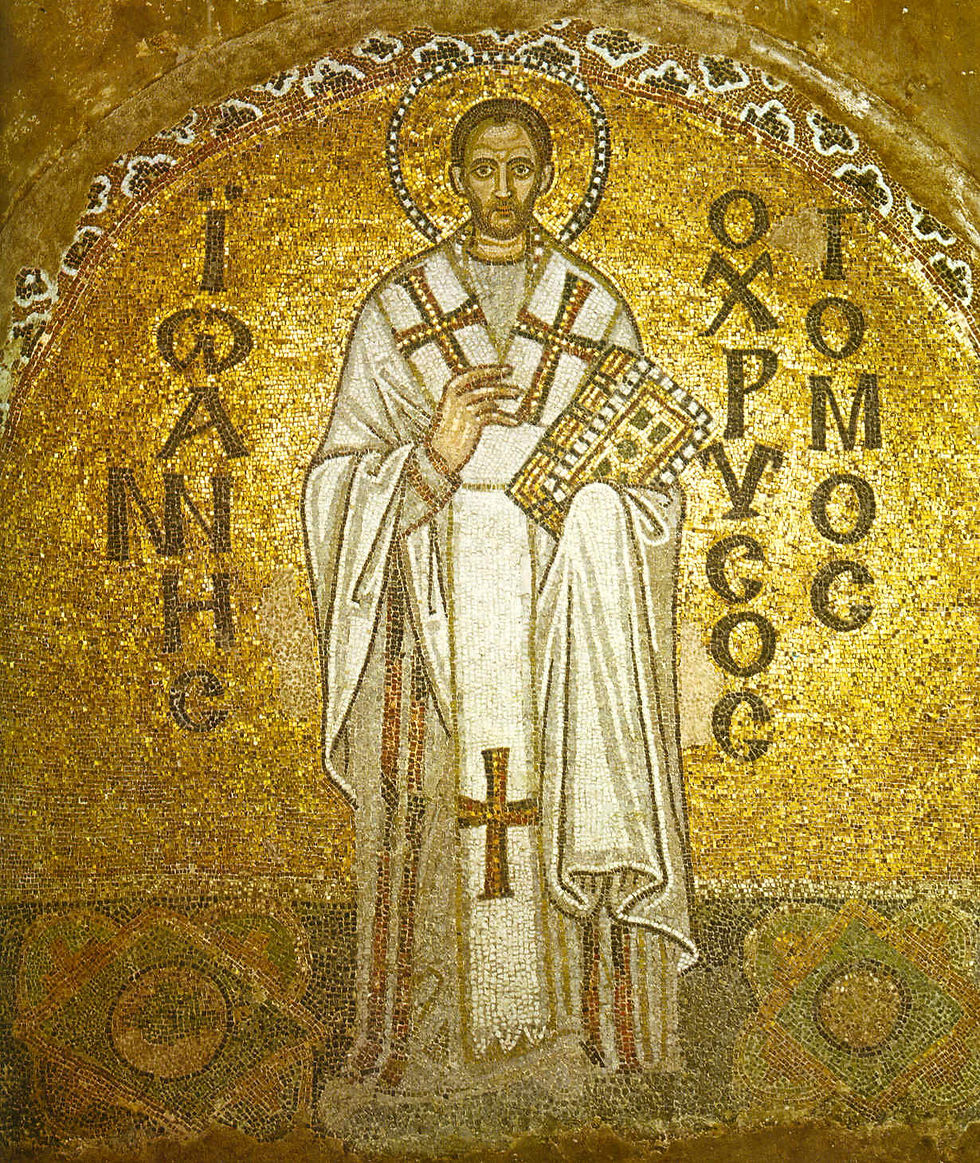
In the fourth century, St. John Chrysostom—whom the church remembers this week—served as Archbishop of Constantinople. His preaching was fearless, his pastoral care tender, and his commitment to the gospel unwavering. But Chrysostom’s life was anything but peaceful. His reforms angered the powerful; his honesty unsettled the comfortable. He confronted corruption, challenged excess, and called the wealthy to care for the poor. For this, he was opposed by imperial officials, criticized by fellow clergy, and eventually exiled from the city he loved.
What is remarkable, however, is not simply that Chrysostom suffered injustice, but how he responded to it. When the imperial court orchestrated his removal, he did not lash out. When fellow bishops betrayed him, he did not return their accusations. When he was marched out of Constantinople under guard, he did not curse those who sent him away. Instead, he prayed for them. He wrote letters urging his supporters not to retaliate. He asked his friends to guard their hearts from bitterness. He blessed even those who had engineered his downfall.
In one letter, he told his congregation that he held no anger toward the emperor or the empress, though they had exiled him twice. “No one can harm the one who does not harm himself,” he wrote—a line that reveals a soul convinced that resentment is a deeper prison than exile. And in his final months, weakened by illness and forced to march across harsh terrain, he continued to speak of his opponents with gentleness. He refused to let their actions determine the condition of his heart.
His last recorded words were, “Glory to God for all things.” They were not spoken from a place of triumph but from the edge of death, far from home, surrounded not by admirers but by guards. Yet they were words of blessing, not bitterness; words of mercy, not judgment. Chrysostom’s life became a living commentary on Psalm 103’s proclamation that God is “slow to anger and abounding in steadfast love.” He believed that those who have received such mercy must become people who extend it—even, and especially, to those who wound them.
Chrysostom’s witness reminds us that forgiveness is not sentiment but practice, not softness but strength. It is the deliberate choice to let God’s steadfast love shape our response to injury. It is the refusal to let resentment become our teacher. It is the courage to bless even those who do not bless us.
Psalm 103 gives us the foundation. It is one of Scripture’s most luminous descriptions of God: “The Lord is slow to anger and abounding in steadfast love.” The psalmist speaks of a God who forgives, who heals, who redeems, who crowns us with compassion. A God who does not “deal with us according to our sins,” but removes our transgressions “as far as the east is from the west.” This is not a passing mood of God; it is God’s very character. Divine mercy is not occasional—it is essential.
And this divine disposition sets the theological baseline for the entire Sunday. Everything else—Jesus’ teaching on forgiveness, Paul’s exhortation to welcome without judgment—flows from this truth: the forgiven become the forgivers. Those who have received mercy are called to extend mercy.
In Matthew 18, Peter asks Jesus how often he must forgive. Seven times? Jesus answers with a number so large it breaks the arithmetic of resentment. Forgiveness, Jesus insists, is not a calculation but a disposition. It is the posture of those who know how deeply they themselves have been forgiven.
Jesus then tells the parable of the unforgiving servant. The servant is forgiven an impossible debt—an amount so vast it is meant to be absurd. Yet he refuses to forgive a fellow servant a trivial amount. His failure is not simply moral; it is spiritual. He has received mercy but has not allowed mercy to reshape his heart. He has been forgiven, but he has not become a forgiver.
The parable is a mirror held up to the soul. It asks: Has God’s mercy changed us? Has the grace we have received become grace we extend? Have we allowed God’s steadfast love to become the pattern of our own life?
Paul, in Romans 14, brings this same truth into the daily life of the church. He urges the community to welcome one another without judgment. Some eat certain foods; others abstain. Some honor particular days; others do not. Paul’s concern is not the correctness of these practices but the spirit in which the community holds them. “Who are you to pass judgment on servants of another?” he asks. Each person stands before their own Lord.
Paul is not advocating moral relativism. He is advocating mercy. He is insisting that the church’s life must reflect the character of God—slow to anger, abounding in steadfast love. Judgment belongs to God, not to us. And because God has welcomed us, we are to welcome one another. Because God has forgiven us, we are to forgive one another. Because God has been patient with us, we are to be patient with one another.
This is what belonging looks like in the kingdom of God. It is belonging without judgment, belonging without suspicion, belonging without the constant measuring of one another’s worthiness. It is belonging rooted in mercy.
In a world that is quick to anger and slow to forgive, the church is called to embody the opposite. We are called to be a community where mercy is practiced, where forgiveness is offered freely, where differences are held gently, and where judgment is surrendered to God.
This is not easy work. Forgiveness can feel costly. Patience can feel exhausting. Welcoming those who differ from us can stretch us. But this is the work of grace. This is the work of those who have been forgiven much. This is the work of those who know that God’s steadfast love is not merely a comfort but a calling.
St. John Chrysostom understood this. In exile, he refused to let bitterness define him. He chose mercy over resentment, compassion over judgment, steadfast love over anger. His life reminds us that forgiveness is not weakness but strength, not surrender but victory, not forgetting but transforming.
So today, let us remember who God is: slow to anger, abounding in steadfast love. And let us remember who we are: a people formed by mercy, called to extend mercy. A people forgiven beyond measure, called to forgive without counting. A people welcomed by God, called to welcome one another.
May God’s steadfast love shape our hearts, our relationships, and our life together—so that the mercy we have received becomes the mercy we give.


Comments